top of page

FREE UK DELIVERY ON ALL PRINTS AND ORIGINALS 

Search

Urban sketching has become a huge part of how I make art. It isn't simply something I do when I'm travelling or when I have a spare afternoon. Drawing on location has fundamentally influenced the way I see, draw and paint.


For me, urban sketching is about much more than recording a building or capturing a particular view. It is about being present in a place, making decisions quickly and responding to what is happening around me.


Simplifying what I see


Spend a few minutes looking at a city street and there is an enormous amount of information competing for your attention. Buildings, windows, signs, cars, people, shadows, trees, cables and all the little details that make a place recognisable.


You simply can't draw everything.

And that's one of the things I love most about sketching.

It forces me to ask: What actually matters?


A few lines might be enough to describe a building. A shape might suggest a tree. A small area of colour might tell me everything I need to know about the light.

The process of simplifying isn't about removing the character from a scene. Quite the opposite. It is about stripping away the unnecessary information until you find the things that make that particular place interesting. That way of thinking has become a big influence on my paintings too.


Finding rhythm in the drawing


When I'm sketching on location, I'm not trying to construct a perfect drawing.

I'm responding. The pen moves, stops, changes direction and moves again. I look at the subject, look back at the page and continually adjust my response.

There is a rhythm to that process.


Sometimes a fast, continuous line captures something that a carefully constructed drawing can't. A slightly awkward line can have more energy and character than one that has been endlessly corrected. I've become increasingly interested in that sense of movement and rhythm in my work. I would rather have a drawing with energy than one that is technically perfect but feels lifeless.


The importance of being there


One of the biggest reasons I love urban sketching is that you have to be there.

A photograph gives you information about a place. Being there gives you an experience of it. The light changes. People move through the scene. A bus arrives and blocks the view. Someone sits beside you. The weather changes. You notice a building you might otherwise have walked straight past. All of those things become part of the sketch.

So when I look back through an old sketchbook, I'm not just looking at drawings. I'm remembering where I was and what it felt like to be there. That immediacy is hugely important to me as an artist.


Sketching together


There is another side to urban sketching that I find just as important: the people.

One of the wonderful things about sketching is that it creates an instant connection. You can sit down somewhere with a sketchbook and, even if you've never met the people around you, you immediately have something in common. And then there's the really interesting part. Put a group of sketchers in front of the same building and you won't get a group of identical drawings. You'll get different viewpoints, different compositions, different marks, different colours and different interpretations. That's exactly how it should be.


There isn't one correct way to draw a place.


That is something I try to encourage in my own teaching. I don't want people to leave a workshop drawing like me. I want them to become more confident in making their own decisions.


Sketching and making art


For me, the relationship between urban sketching and my wider art practice is therefore very close. Sketching keeps me looking.


It keeps me curious about buildings, history, light, colour and movement. It encourages me to work quickly, to simplify and to trust a line rather than endlessly correcting it.

Most importantly, it keeps me connected to the real world.


Urban sketching isn't separate from my art. It is one of the ways I develop it.


Every time I open a sketchbook, I'm still learning how to see. And I think that's probably why, after years of drawing and painting, I'm still fascinated by the same things: buildings, places, people, colour, movement and the unexpected moments that happen when you're there.


Many people come to my workshops believing they want to learn watercolour.

What they actually want is freedom.


They admire paintings that appear effortless, full of light, movement and confidence. They buy another set of brushes, another colour chart or another book, hoping that the next technique will unlock that elusive loose style.

The truth is that loose watercolour rarely begins with the brush.

It begins with the line.


The Confidence Comes Before the Colour


One of the biggest reasons people struggle with watercolour is uncertainty. As soon as the brush touches the paper, every mark feels permanent. There's a temptation to paint slowly, cautiously and to continually correct mistakes.

Working in line and wash changes that mindset entirely.

A confident ink drawing gives you a framework. Once the structure is established, the watercolour becomes something very different. Instead of describing every window, roof tile or brick, the paint is free to suggest atmosphere, light and shadow.


The drawing does the explaining.

The paint does the storytelling.


Ink Encourages Better Observation


When drawing directly in ink there is no eraser.

That might sound intimidating, but it actually sharpens your observation.

You begin to look for the important shapes instead of every tiny detail. You learn to simplify buildings, recognise perspective naturally and identify the rhythm that exists within a street scene.


Those observational skills transfer directly into your painting.

Rather than copying a photograph, you're interpreting what you see.


Watercolour Becomes More Spontaneous


One of the greatest strengths of watercolour is its unpredictability.

Granulation, blooms, soft edges and flowing washes all create effects that simply cannot be manufactured.


Yet many artists spend their time fighting those qualities.

When you've already established the drawing with ink, you're no longer asking the paint to describe everything. It can simply be itself. Suddenly you're allowing colours to merge.


You're dropping pigment into wet washes.

You're leaving areas untouched.

You're discovering rather than controlling.

That's where expressive painting begins.


Stop Painting Objects. Start Painting Light.


The purpose of watercolour isn't to colour in a drawing.

It's to capture light.


Once the line has established the architecture of a scene, you can concentrate on the changing light across rooftops, reflections in wet streets or warm afternoon shadows stretching across a pavement.


The painting becomes less about accuracy and more about atmosphere.

That's what people respond to emotionally.


Mistakes Become Character


One lesson I try to teach every student is that perfection isn't interesting.

Some of my favourite sketches contain crooked lines, unexpected splashes and accidental marks.


Those imperfections remind us that a real person stood on location and responded to a place in a single moment. They give the work life.

Line and wash embraces those happy accidents instead of hiding them.


Why I Continue to Work This Way


After years of painting cities around the world, I still return to line and wash.

It allows me to work quickly.

It keeps my paintings fresh.


Most importantly, it prevents me from overworking a sketch.

Whether I'm standing in Venice, London or a quiet Somerset village, my approach remains the same: observe, simplify, draw with confidence and let the watercolour breathe.


The goal has never been perfection.

The goal is to capture the feeling of being there.


Discover Your Own Freedom


If you've been frustrated by tight, overworked watercolours, try putting the emphasis on drawing first.


Develop a confident line.

Learn to simplify.

Then let the paint do what it does best.


You may discover that the loose watercolour style you've been chasing wasn't really about watercolour at all.

It was about learning to trust your line.


Ready to sketch with more confidence?

If you'd like to learn the line and wash approach that I use in my own sketchbooks and workshops then explore the sketch school sectio on website.


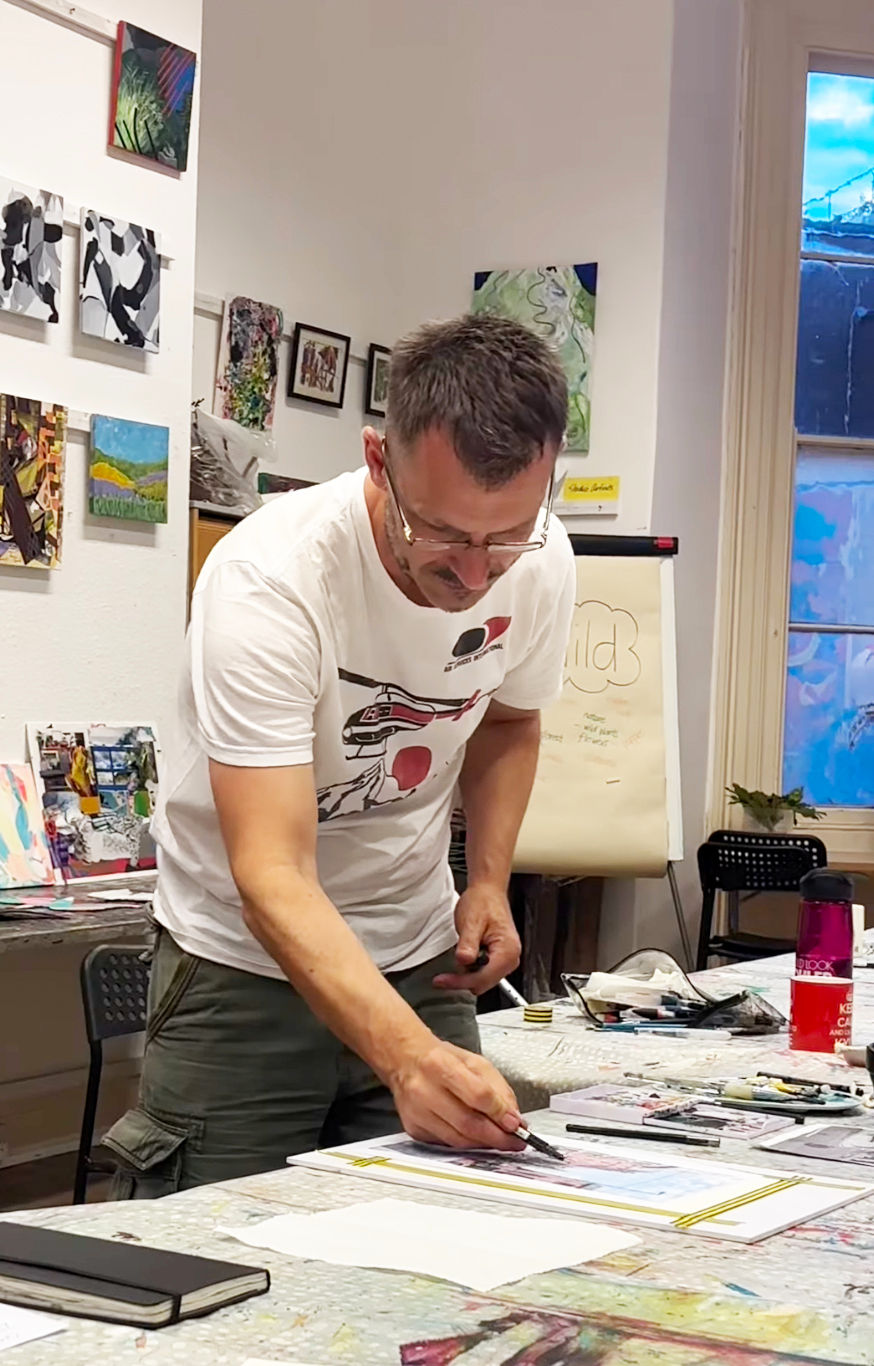
I’m delighted to announce that I’ll be leading a Line & Wash Urban Landscape Sketching workshop at Taunton Brewhouse. It will be a day dedicated to helping you develop a freer, more expressive approach to drawing and painting the built environment.


Whether you’re completely new to urban sketching or looking to loosen up an established style, this workshop is designed to build confidence rather than chase perfection.


Urban landscapes can often feel overwhelming. Complex architecture, perspective, moving people and endless detail can leave us wondering where to begin. Throughout the day I’ll show you how I simplify these scenes into confident line, expressive marks and fresh watercolour washes, creating sketches that capture the atmosphere and character of a place rather than every brick and window.


The workshop draws on many of the ideas explored in my book, Line & Wash in the Urban Landscape, but expands them through live demonstrations, practical exercises and plenty of individual guidance. We’ll explore continuous line drawing, composition, colour, editing a scene and, perhaps most importantly, learning to trust instinct over precision. These are the same principles that have shaped my own practice over many years of sketching urban scenes. .


One of the things I enjoy most about teaching is seeing people discover that they don’t need to produce a technically perfect drawing to create something full of energy and personality. Some of the most expressive sketches come from embracing the unexpected and allowing the materials to do some of the work for you.


The workshop is suitable for a wide range of abilities, from enthusiastic beginners to experienced artists wanting to develop a looser, more contemporary approach. You’ll leave with practical techniques that you can apply whenever you’re sketching towns, cities, villages or while travelling.


If you’ve been meaning to spend more time sketching urban scenes, or simply want a creative day immersed in drawing and painting, I would love you to join me.

Places are limited, so early booking is recommended.


You can find full workshop details and book your place here:


I hope to see you there!


bottom of page