


Why Urban Sketching Is at the Heart of My Art

Urban sketching has become a huge part of how I make art. It isn't simply something I do when I'm travelling or when I have a spare afternoon. Drawing on location has fundamentally influenced the way I see, draw and paint.
For me, urban sketching is about much more than recording a building or capturing a particular view. It is about being present in a place, making decisions quickly and responding to what is happening around me.

Simplifying what I see
Spend a few minutes looking at a city street and there is an enormous amount of information competing for your attention. Buildings, windows, signs, cars, people, shadows, trees, cables and all the little details that make a place recognisable.
You simply can't draw everything.
And that's one of the things I love most about sketching.
It forces me to ask: What actually matters?
A few lines might be enough to describe a building. A shape might suggest a tree. A small area of colour might tell me everything I need to know about the light.
The process of simplifying isn't about removing the character from a scene. Quite the opposite. It is about stripping away the unnecessary information until you find the things that make that particular place interesting. That way of thinking has become a big influence on my paintings too.
Finding rhythm in the drawing
When I'm sketching on location, I'm not trying to construct a perfect drawing.
I'm responding. The pen moves, stops, changes direction and moves again. I look at the subject, look back at the page and continually adjust my response.
There is a rhythm to that process.
Sometimes a fast, continuous line captures something that a carefully constructed drawing can't. A slightly awkward line can have more energy and character than one that has been endlessly corrected. I've become increasingly interested in that sense of movement and rhythm in my work. I would rather have a drawing with energy than one that is technically perfect but feels lifeless.
The importance of being there
One of the biggest reasons I love urban sketching is that you have to be there.
A photograph gives you information about a place. Being there gives you an experience of it. The light changes. People move through the scene. A bus arrives and blocks the view. Someone sits beside you. The weather changes. You notice a building you might otherwise have walked straight past. All of those things become part of the sketch.
So when I look back through an old sketchbook, I'm not just looking at drawings. I'm remembering where I was and what it felt like to be there. That immediacy is hugely important to me as an artist.
Sketching together

There is another side to urban sketching that I find just as important: the people.
One of the wonderful things about sketching is that it creates an instant connection. You can sit down somewhere with a sketchbook and, even if you've never met the people around you, you immediately have something in common. And then there's the really interesting part. Put a group of sketchers in front of the same building and you won't get a group of identical drawings. You'll get different viewpoints, different compositions, different marks, different colours and different interpretations. That's exactly how it should be.
There isn't one correct way to draw a place.
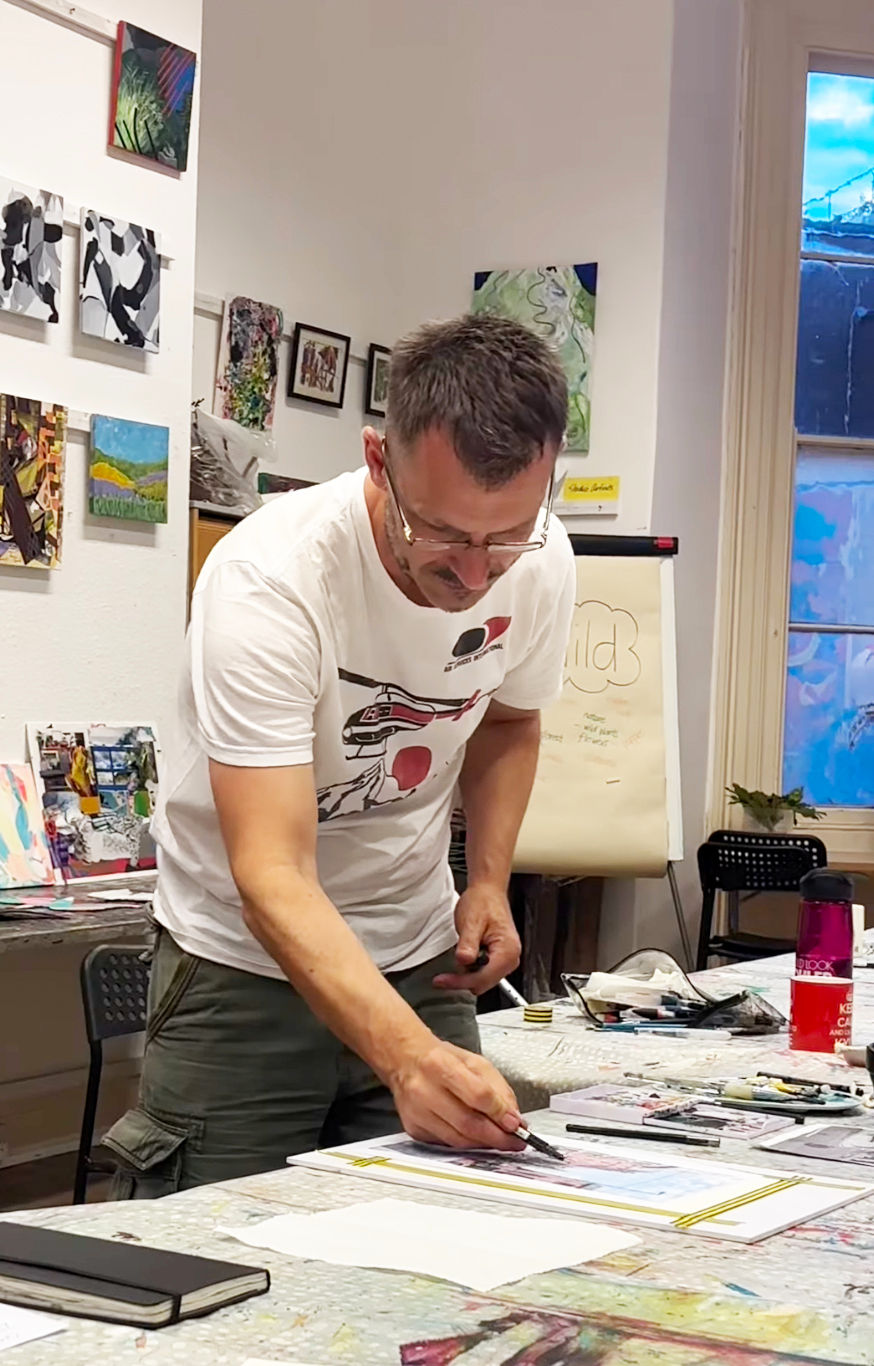
That is something I try to encourage in my own teaching. I don't want people to leave a workshop drawing like me. I want them to become more confident in making their own decisions.
Sketching and making art
For me, the relationship between urban sketching and my wider art practice is therefore very close. Sketching keeps me looking.
It keeps me curious about buildings, history, light, colour and movement. It encourages me to work quickly, to simplify and to trust a line rather than endlessly correcting it.
Most importantly, it keeps me connected to the real world.

Urban sketching isn't separate from my art. It is one of the ways I develop it.
Every time I open a sketchbook, I'm still learning how to see. And I think that's probably why, after years of drawing and painting, I'm still fascinated by the same things: buildings, places, people, colour, movement and the unexpected moments that happen when you're there.


Comments